
Bible Study Online
Week 2 The Bible
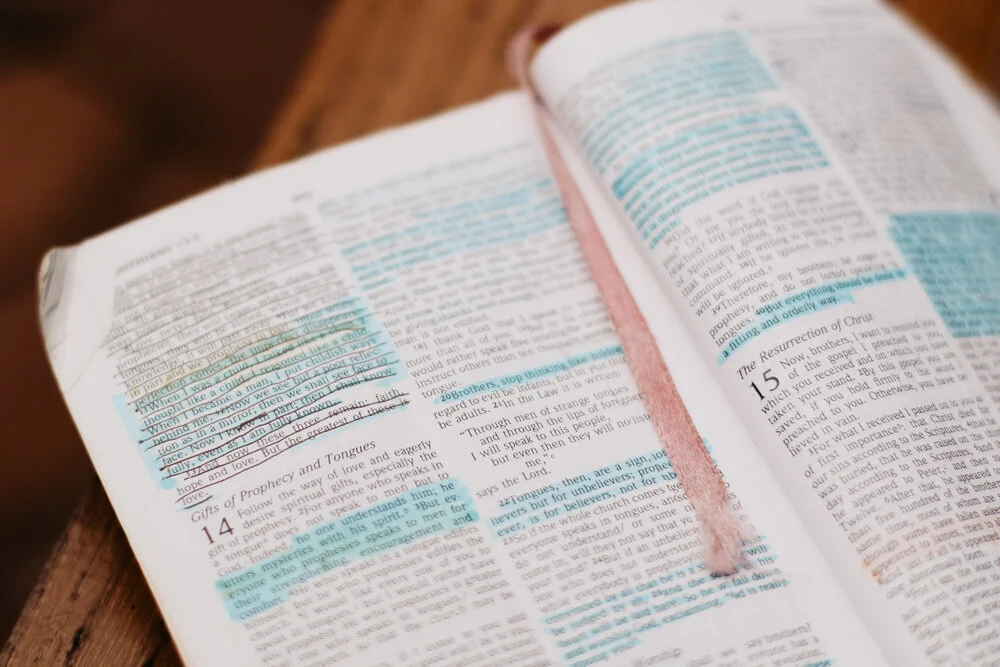
We believe that the Holy Bible, sometimes called the Holy Scriptures, is the infallible, inerrantly inspired Word of God.
We believe that the Bible was RECORDED by men, under the divine power and inspiration of God. We believe that the Word is true and that it is truth.
Through the years the Scriptures have been organized for better understanding. So now there are chapters and verses for us to reference as we study. This was not the case with the original manuscripts written on scrolls.
The Composition of the Bible
The Old Testament
The Old Testament covers a span of time from approximately 1440 BC [before Christ]- 430BC. There appears to be about 400 years of theological silence from the writing of Malachi until the birth of Christ [The Gospels].
There are 39 books in the Old Testament. The Old Testament books have been divided into groups according to their form and purpose.
The Law: Genesis, Exodus, Leviticus, Numbers and Deuteronomy.
These books, also called the Pentateuch [Hebrew] were written by Moses and cover creation, the flood, the deliverance of Israel from Egypt, the building of the tabernacle and the beginning of the Levitical priesthood. It also gives us the laws given by God for us to follow.
The History: Joshua, Judges, Ruth, 1 Samuel, 2Samuel, 1Kings, 2Kings, 1Chronicles, 2Chronicles, Ezra, Nehemiah, Esther
These books have different authors, but the common thread is that they tell Israel’s story. There are accounts of wars; victories and defeats; migrations and movement; kings and prophets; triumphs and tragedies. It tells of the exile to Babylon and the return and rebuilding of the city of Jerusalem.
The Books of Poetry: Job, Psalms, Proverbs, Ecclesiastes, Song of Solomon.
These books speak to our relationship with God through the beautifully constructed books that speak to God’s ability to restore us; to hear us in our distresses; and to answer our prayers. Also, we find recorded the wisdom of King Solomon and one of the most poignant love stories of all time.
The Prophets:
The Major Prophets: Isaiah, Jeremiah, Lamentations, Ezekiel, Daniel
The Minor Prophets: Hosea, Joel, Amos, Obadiah, Jonah, Micah, Nahum, Habakkuk, Zephaniah, Haggai, Zechariah, Malachi
The Prophets address Israel’s unfaithfulness to God and God’s response. The division into two categories of Major and Minor seems to be based on the length of the writing. All the warnings recorded highlight important messages from God, urging us to be faithful to Him, then and now.
The New Testament
The New Testament books were recorded from about 50 AD [Anno Domini - in the year of our Lord] to about 96AD.
There are 27 books in the New Testament. They are also divided into groups.
The Gospels: A gospel (from Old English, gōd spell "good news") is a writing that describes the life, death, burial, and resurrection of Jesus.
Matthew Mark, Luke, and John. Gospels- Proclaims The Good news. The kerygma.
[Kerygma is the Greek word used in the New Testament . It is related to the Greek verb κηρύσσω (kērússō), to cry or proclaim as a herald, and means proclamation, announcement, or preaching.]
The New Testament teaches that as Jesus launched his public ministry he entered the synagogue and read from the scroll of Isaiah the prophet. He identified himself as the one Isaiah predicted in Isa 61 (Luke 4:17-21). The text is a programmatic statement of Jesus' ministry to preach or proclaim (Kerygma), good news to the poor and the blind and the captive.
“The Gospel of Luke, the Gospel of Matthew and the Gospel of Mark are known as the Synoptic Gospels because they include many of the same stories, often in the same sequence, and sometimes the exact same wording.
Scholars believe that these gospels share the same point of view and are clearly linked. The term synoptic comes from the Greek 'syn,' meaning "together," and 'optic,' meaning ‘seen’ . [ From Wikipedia, the free encyclopedia
Almost all of Mark's content is found in Matthew, and much of Mark is similarly found in Luke. Additionally, Matthew and Luke have a large amount of material in common that is not found in Mark.
The Gospel of John, while chronicling some of the same events as the Synoptic Gospels, focuses on the theological description of Jesus as the eternal Word, the unique savior of humanity. This book is more focused on Christology.
Christology (from Christ and Greek -λογία, -logia) is the field of study within Christian theology which is primarily concerned with the nature and person of Jesus Christ. Primary considerations include the relationship of Jesus' nature and person with the nature and person of God. As such, Christology is generally less concerned with the details of Jesus' life (what he did) or teaching than with who or what he is. How does a human nature and a divine nature co-exist in one person. The study of the inter-relationship of these two natures is one of the preoccupations of the work of John. Wikipedia, the free encyclopedia
The Book of History: Acts
Also called the Acts of the Apostles, this book records the beginning and history of the New Testament Church.
The Epistles or Letters:
Romans, 1Corinthians, 2Corinthians, Galatians, Ephesians, Philippians, Colossians, 1Thessalonians, 2Thessolonains, 1Timothy, 2Timothy, Titus, Philemon, Hebrews, James, 1Peter, 2Peter, 1John, 2John, 3John, Jude.
These letters written to New Testament churches were written to edify, encourage, and sometimes correct the new believers and are effective in our walk and work with God today. Many of the letters were written by Paul on any one of his three missionary trips.
The Apocalypse- End time events
Revelation
The Book of the Revelation of John, usually referred to simply as Revelation or the Book of Revelation, is the last book of the New Testament. It is also called the Apocalypse of John.
Apocalypse, from the Greek, is a synonym for "Revelation", but also from it comes the name for the type of literature; an "apocalypse" is a work of apocalyptic literature. John's is the only book in the Canon [Bible] that is completely composed of apocalyptic literature.
Conclusion of Overview
The Bible contains instruction, encouragement, correction, and direction. This is what the Word says about the Word.
2 Timothy 3:16
Every Scripture is God-breathed (given by His inspiration) and profitable for instruction, for reproof and conviction of sin, for correction of error and discipline in obedience, [and] for training in righteousness (in holy living, in conformity to God's will in thought, purpose, and action),
It contains the promises of God for your life and the principles by which we obtain the promised blessing. The Word is the power of God. It provides milk for the babies and meat for the mature saints. It is God speaking to you every time you read the Word.
1Peter 2:2-3
2Like newborn babies you should crave (thirst for, earnestly desire) the pure (unadulterated) spiritual milk, that by it you may be nurtured and grow unto [completed] salvation,
3Since you have [already] tasted the goodness and kindness of the Lord.
How to Study the Bible
v Create quiet space.
v Pick a time to be consistent in your study so that it becomes a habit- perhaps first thing in the morning, before the distractions of the day.
v Pray for the Holy Spirit to guide your thinking, your ability to understand what you read.
v Journal what the Word reveals to you.
v Use commentaries for insight into the literary and historical context for deeper understanding.
vMeditate and pray after reading and studying the Word for the Spirit of God to lead you in applying the Word to your life.
Click Below for Bible Study Lessons
Week 2
Week 3
Week 4
Week 5